In this article
Quick answer
Clarity matters less in a colored diamond than in a white one. Body color masks small inclusions, and the busy facet patterns used for colored stones hide them further. Color drives the look and the value. For most yellow, pink and blue diamonds, a stone that is clean to the naked eye is all you need, and paying extra for very high clarity adds nothing you can see. Clarity counts more in pale stones, large stones and step cuts.
Why does clarity matter less when a diamond has color?
- Color camouflages. A tiny white or gray inclusion stands out against a colorless background. Against saturated yellow or pink it blends in.
- The cuts hide more. Colored diamonds are usually cut as radiants, cushions and ovals with many small facets. That broken-up pattern scatters the view into the stone.
- The eye goes to color. When you look at a colored diamond you notice hue and strength first. Clarity features have to be large to compete.
The market reflects this. Between two colored diamonds, a stronger color grade is worth far more than a higher clarity grade.

Which clarity grade is enough?
| Clarity grade | In a colored diamond |
|---|---|
| FL, IF, VVS1, VVS2 | Flawless to the eye. The premium over VS is rarely visible. |
| VS1, VS2 | Clean to the eye in almost every stone. A safe, sensible choice. |
| SI1 | Usually clean to the eye in saturated colors and brilliant-style cuts. |
| SI2 | Depends on the stone. Check where the inclusions are. |
| I1 and below | Inclusions visible, and may affect durability. |
The grades themselves are explained in the diamond clarity chart, VS clarity guide, SI clarity guide and VS vs SI comparison.
When does clarity still matter?
- Pale colors. A Fancy Light or Light stone has little color to hide behind. Treat it more like a white diamond.
- Step cuts. Emerald and asscher cuts have large open facets that act as windows. Choose VS2 or better. See why step cuts need higher clarity.
- Large stones. Above about 3 carats, facets are bigger and inclusions easier to see.
- Dark inclusions under the table. One black crystal in the center of the top facet is more visible than several pale ones near the edge.
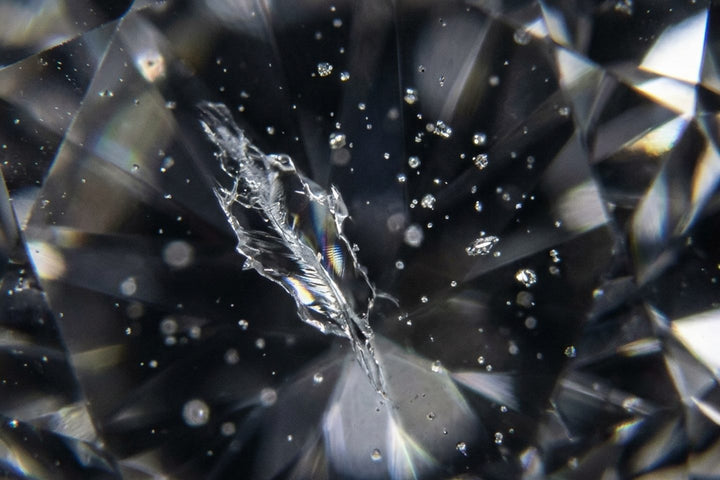
- Durability. A feather that reaches the surface near a point or corner is a weak spot whatever the color. See the diamond inclusions guide.
Does it differ by color?
| Color | How forgiving | Notes |
|---|---|---|
| Yellow | Forgiving | Strong yellows hide pale inclusions well. |
| Pink | Moderately forgiving | Pink is often light, so check it by eye. |
| Blue | Moderately forgiving | Light blues show more than deep ones. |
| Black | Not applicable | Opaque, so clarity is not graded. Judge the surface instead. |
For black diamonds, see are black diamond rings durable.
Is clarity different in lab-grown colored diamonds?
The grading scale is the same. Lab-grown diamonds can contain their own kinds of inclusions, such as tiny dark pinpoints from the growth process, and graders record them in the same way. In practice lab-grown colored diamonds are widely available in high clarity, so you seldom have to trade clarity against color. See do lab-grown diamonds have inclusions.
How should you rank the factors when buying?
- Color: hue and strength. This is what you are buying. See how colored diamonds are graded.
- Shape and cut: they determine how much of that color you see. See the best shapes for fancy color.
- Carat: size also deepens color.
- Clarity: clean to the eye, and structurally sound.
If your budget forces a choice, move down a clarity grade before you move down a color grade.
How do you check that a stone is clean to the eye?
- Look at it face-up from normal viewing distance, about a hand's length from your eye, in daylight.
- Ask for video as well as photos. Inclusions that vanish in a still image can show as the stone turns.
- Read the clarity diagram on the report to see where the marks are. Near the edge is better than under the table.
- Remember that prongs can cover inclusions at the edge.
Browse yellow, pink and blue diamond engagement rings, or read the fancy colored diamonds guide and the diamond buying guide.
Frequently asked questions
Is VVS clarity worth paying for in a colored diamond?
Rarely. You cannot see the difference from VS without magnification, and the money has more effect spent on color or size.
Can inclusions change the color?
Occasionally. A large dark inclusion can make a stone look grayer, and a colored inclusion can reflect through the facets. Small ones have no effect.
Are colored diamonds more included than white ones?
Natural colored diamonds often are, because buyers accept lower clarity in exchange for rare color. Lab-grown colored diamonds are commonly high clarity.
Does clarity affect sparkle?
Only at the lowest grades, where clouds or many inclusions block light.
Is SI1 acceptable for a pink diamond?
It can be if the stone is clean to the eye. Pink is often light, so look carefully before deciding.

 IGI certified