In this article
Quick answer
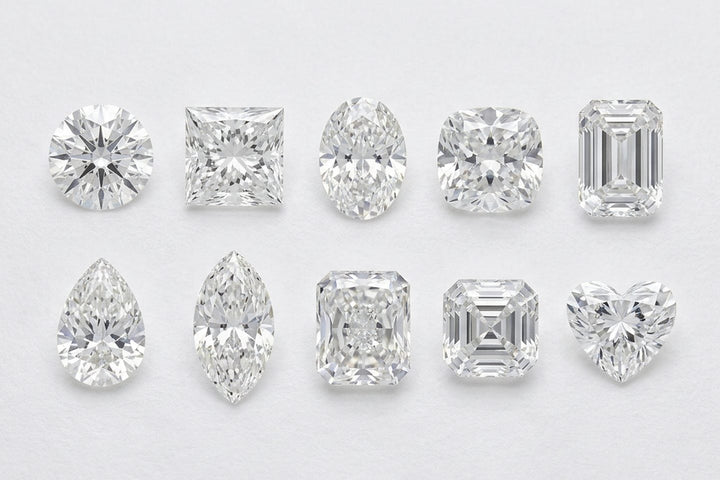
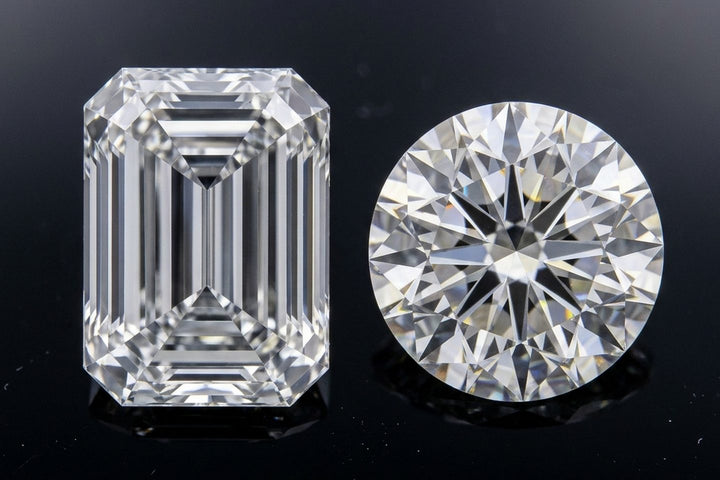
Radiant and cushion cuts show fancy color best, followed by oval and pear. Their facet patterns bounce light around inside the stone many times before it leaves, and every pass through the diamond picks up more color. A round brilliant is designed to send white light straight back, so it looks lighter in color. Step cuts such as emerald and asscher show color as pale, open flashes and need a stronger grade to look as rich.
Why does the shape change how much color you see?
Color in a diamond works like color in a glass of tea. A thin layer looks pale and a deep one looks dark. The longer light travels inside a colored diamond, the more color it gathers.
Cutters use this on purpose. For a white diamond the goal is to return as much white light as possible. For a colored diamond the goal is to keep light inside the stone a little longer and bring it back to the eye carrying color. Shapes with many small angled facets on the underside do this well.

How do the shapes rank for color?
| Shape | Color face-up | Character |
|---|---|---|
| Radiant | Strongest | Rich, even color with lively sparkle |
| Cushion | Strongest | Deep, soft color, the classic fancy color cut |
| Oval | Strong | Good color with an elongated outline |
| Pear | Strong | Color gathers toward the point |
| Marquise and heart | Medium to strong | Color concentrates at the tips and lobes |
| Princess | Medium | Bright, with color strongest at the corners |
| Round brilliant | Lighter | Maximum white sparkle, color is diluted |
| Emerald and asscher | Lighter | Calm, transparent, shows color in broad panes |
This is why so many natural colored diamonds are cut as radiants and cushions, and why fancy colored round diamonds are comparatively uncommon.
Why are radiant and cushion cuts the favorites?
Both have a deep underside covered in small facets. Light entering the top is reflected from facet to facet before it returns, so the color builds. A colored diamond cut as a radiant or cushion can look a full step stronger than the same material cut as a round.
- Radiant has straight sides and cropped corners. It suits people who want strong color with a crisp outline. Read the radiant cut guide and see radiant cut rings.
- Cushion has rounded sides and corners. It gives a softer, slightly antique look. Read the cushion cut guide and see cushion cut rings.
How do oval and pear cuts perform?
Very well. They hold nearly as much color as a cushion and add length on the finger. Color in a pear is usually a little stronger near the point and lighter in the rounded end, which most people find attractive. Both shapes can show a darker band across the middle called a bow tie. Our bow tie guide explains what to look for.
See oval rings and pear rings, and the oval and pear guides.
Should you avoid a round colored diamond?
No. A round simply needs a stronger color grade to look the same. If you love the shape, choose Fancy Intense or Fancy Vivid instead of Fancy. In return you get the most sparkle of any shape. See round rings and the round brilliant guide.
What about emerald and asscher cuts?
Step cuts have long flat facets like the steps of a staircase. They act as windows. You see into the stone, and color appears as broad, even panes instead of concentrated sparkle. The effect is elegant and understated. To get obvious color, pick a strong grade, and expect clarity to matter more because inclusions are easier to see. Read step cut vs brilliant cut and see emerald cut rings.
How should you combine shape and color grade?
| If you want | Choose |
|---|---|
| The richest color for the grade | Radiant or cushion |
| Strong color and a longer look | Oval or pear |
| Maximum sparkle with color | Round, one grade stronger |
| A calm, glassy look | Emerald or asscher, Fancy Intense or above |
Two other things strengthen color at any shape: a larger stone, and metal of a matching color around it. See the best metal for a yellow diamond and the best metal for a pink diamond. Grades are explained in Fancy vs Fancy Intense vs Fancy Vivid.
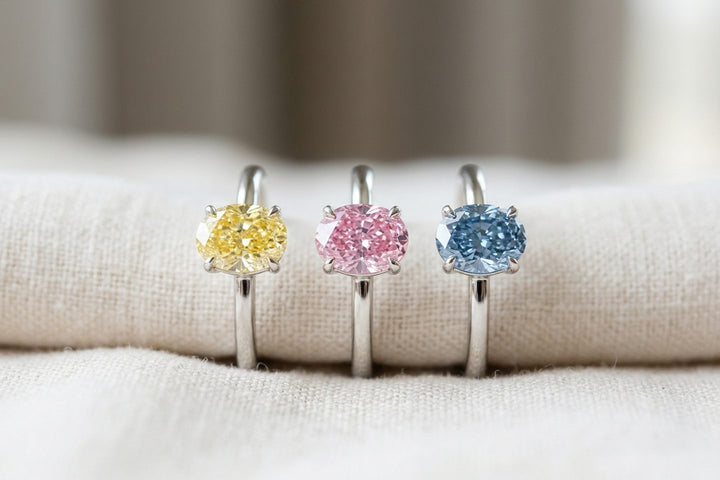
At Diamond Studio you choose the shape and the color on the ring page. Start with yellow, pink or blue diamond engagement rings, or compare outlines in the diamond shape guide.
Frequently asked questions
Does the shape change the color grade on the report?
Yes, indirectly. Color is graded face-up, so a cut that holds more color can earn a higher grade from the same rough material.
Which shape is best for a pink diamond?
Cushion, radiant and oval. Pink is often light, so a cut that concentrates color helps the most.
Which shape is best for a blue diamond?
Cushion, radiant and oval for depth of color. An emerald cut is a popular alternative when the blue is strong.
Does shape matter for a black diamond?
Not for color, because a black diamond is opaque. Choose by outline and durability. Shapes without sharp points are the most practical.
Do color-holding cuts look smaller?
A little. They carry more weight in their depth, so a cushion or radiant is slightly smaller across than a round of the same carat weight.

 IGI certified