Introduction
Diamond buying guide Lab Grown vs Natural Diamonds Reviewed by Diamond Studio Education Team | Last updated June 2026 Lab grown and natural diamonds can both be real diamonds. They share the same carbon crystal structure, can be graded for the same 4Cs, and can be used in engagement rings, wedding rings, earrings, bracelets, necklaces, and other fine jewelry. The practical difference is origin, value, availability, and what matters most to the buyer.
Shop lab grown rings Compare IGI and GIA
Quick answer
Choose lab grown diamonds if you want diamond beauty, strong size-for-budget value, and clear modern sourcing. Choose natural diamonds if geological origin, rarity, and traditional mined-diamond value are the priority. For most online engagement ring shoppers, the best choice is the diamond that has the right appearance, certification, setting, budget fit, and support behind it.
Lab grown and natural diamonds compared
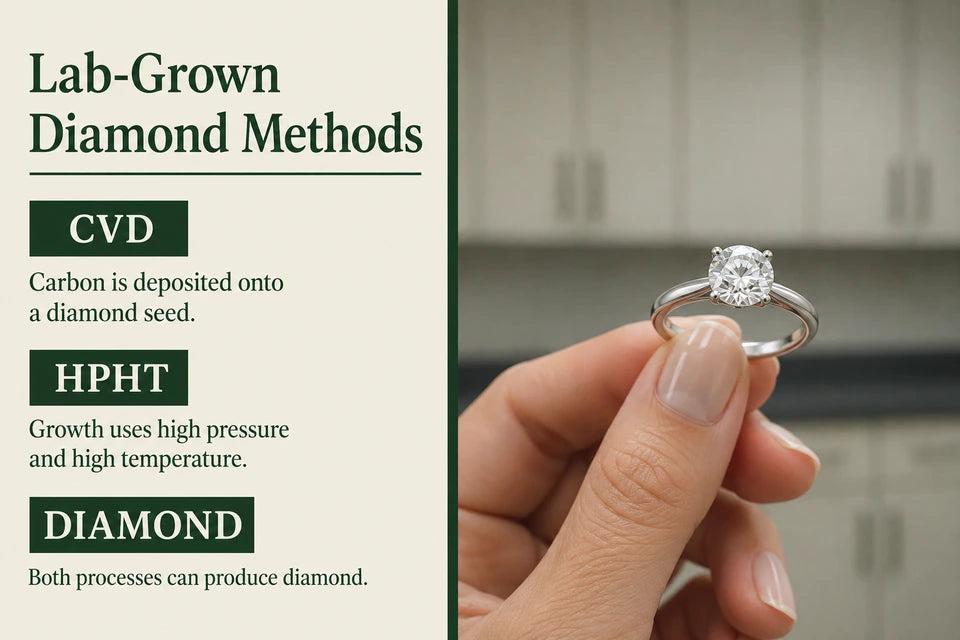
Factor Lab grown diamonds Natural diamonds Origin Created in controlled laboratory conditions, commonly by CVD or HPHT growth methods. Formed underground through natural geological processes over very long periods of time. Composition Carbon crystal structure with the optical and physical properties expected from diamond. Carbon crystal structure with the optical and physical properties expected from diamond. Appearance Can look identical to natural diamonds to the eye when cut, color, clarity, and carat are comparable.
Can look identical to lab grown diamonds to the eye when cut, color, clarity, and carat are comparable. Price and size Often allows a larger stone, higher color, or higher clarity for the same budget. Usually costs more for comparable grades because natural supply is limited. Certification Can be graded by laboratories such as IGI or GIA with growth method disclosed. Can be graded by laboratories such as GIA or IGI with natural origin disclosed.
Long-term value Best considered for beauty, wearability, and budget value rather than resale expectations. May appeal to buyers who value rarity and traditional mined-diamond market history.
What makes a lab grown diamond real?
A lab grown diamond is not cubic zirconia, moissanite, or a diamond imitation. It is diamond material grown above ground. Like natural diamonds, lab grown diamonds can vary in cut quality, color, clarity, carat weight, fluorescence, measurements, polish, and symmetry. That is why the grading report and product details still matter. Cut Cut affects brilliance and light performance. For round diamonds, excellent or ideal cut grades are easier to compare.
For fancy shapes, review images, video, symmetry, and proportions. Color D to F is colorless, while G to H can still look bright in many settings. Metal color matters: white metals reveal warmth more than yellow or rose gold. Clarity VS1 and VS2 are popular because inclusions are often difficult to see without magnification. Emerald and asscher shapes may need closer clarity review.
When lab grown diamonds make sense
You want the largest visual size possible within a fixed engagement ring budget. You prefer a modern origin story and clear lab grown disclosure. You want a high color or clarity grade without moving into a much higher price range. You are shopping online and want to compare many certified options quickly. You care more about daily beauty and wearability than resale assumptions.
When a natural diamond may be preferred
Some buyers prefer a natural diamond because they value geological origin, mined-diamond rarity, heirloom tradition, or the established natural diamond market. That preference is valid. The key is to compare diamonds fairly and avoid paying more only because two stones sound similar. Compare the report, measurements, cut quality, face-up appearance, and setting details.
How to compare diamonds fairly online
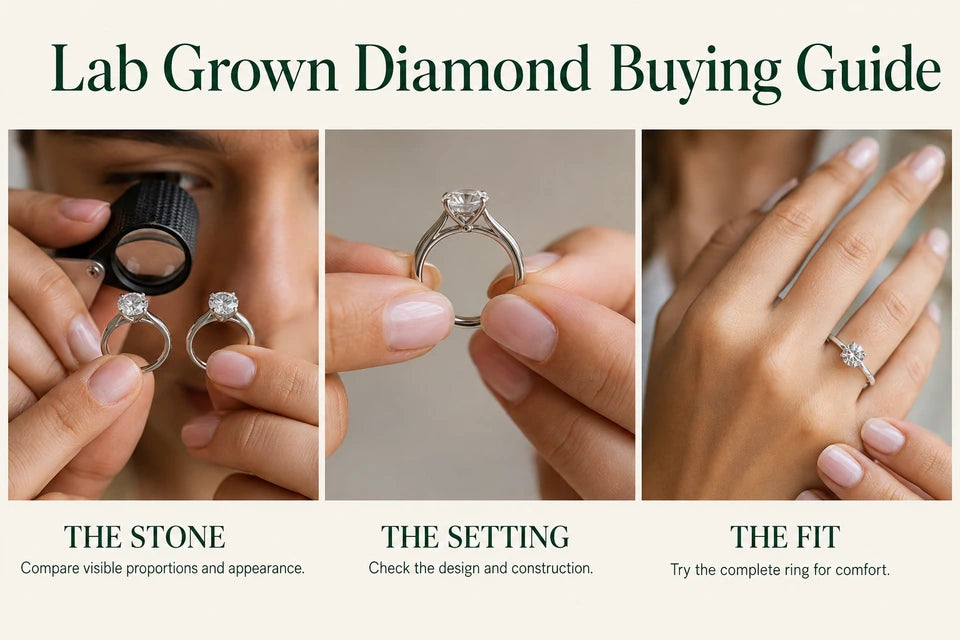
Compare the same shape first, then carat weight, color, clarity, and cut details. Look at measurements, not just carat weight. Two diamonds with the same carat can face up differently. Review certification and confirm the diamond is labeled as lab grown or natural. Check images or video for brightness, symmetry, and visible inclusions. Match the diamond to a secure setting, especially for pear, marquise, princess, and other shapes with points or corners.
Read shipping, return, resizing, warranty, and appraisal details before checkout. Diamond shapes guide Color and clarity guide Jewelry FAQ
Diamond Studio support
Diamond Studio is an online-first fine jewelry store focused on customers across the United States, with worldwide shipping available. We ship from New York City and help customers compare lab grown diamond engagement rings, wedding rings, and fine jewelry without operating a public retail storefront.
Lab grown vs natural diamond FAQ
Are lab grown diamonds real diamonds?
Yes. Lab grown diamonds have the same carbon crystal structure as mined diamonds. They are not moissanite or cubic zirconia.
Can people tell the difference by looking?
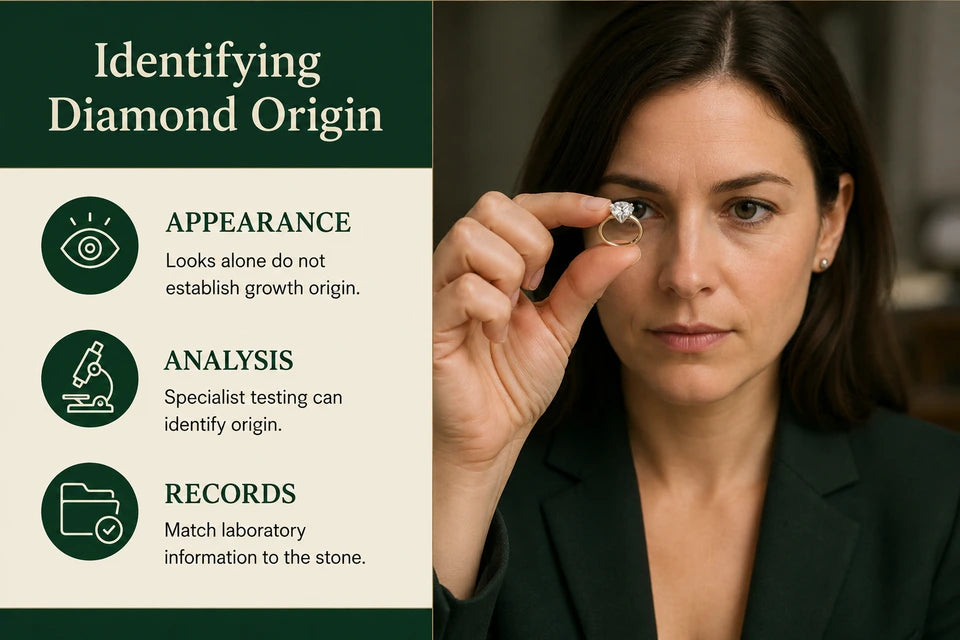
Appearance alone does not reliably establish diamond origin. A gemological laboratory uses specialized testing to distinguish lab grown and natural diamonds.
Are lab grown diamonds good for engagement rings?
Lab grown diamonds can be used in engagement rings. Compare cut, measurements, setting, grading details and budget when choosing an individual stone.
Do lab grown diamonds need a grading report?
A grading report helps document identity, origin and quality details. Match the report to the diamond and review the information supplied for that particular report type.
Which is better, lab grown or natural?
Neither is automatically better. Lab grown diamonds often offer more size for the budget; natural diamonds may appeal to buyers who value geological origin and rarity. Consider appearance, price and your preferences.
Every piece has its own specifications. Consult the product details and any accompanying grading report when comparing individual jewelry.
Original page address ↗