


What makes a three-stone engagement ring distinctive?
A three-stone engagement ring places a center stone between two side stones. The design can emphasize one large diamond or present three stones as a balanced group. Its beauty comes from their relationship: shape, width, height, spacing and the way they handle light.
Some couples choose three stones to represent past, present and future; others simply prefer the design. Neither interpretation dictates the proportions. Start by deciding whether you want a clearly dominant center or a broader composition across the finger.
This guide explains what to compare before choosing a lab-grown three-stone ring, including the details a photograph or total carat weight can leave unclear.
Balance the center and side stones
Smaller side stones usually leave the center as the focal point. Larger sides create a wider, more even arrangement. The difference is visual, so compare measurements and photographs rather than relying on a universal side-to-center carat ratio.
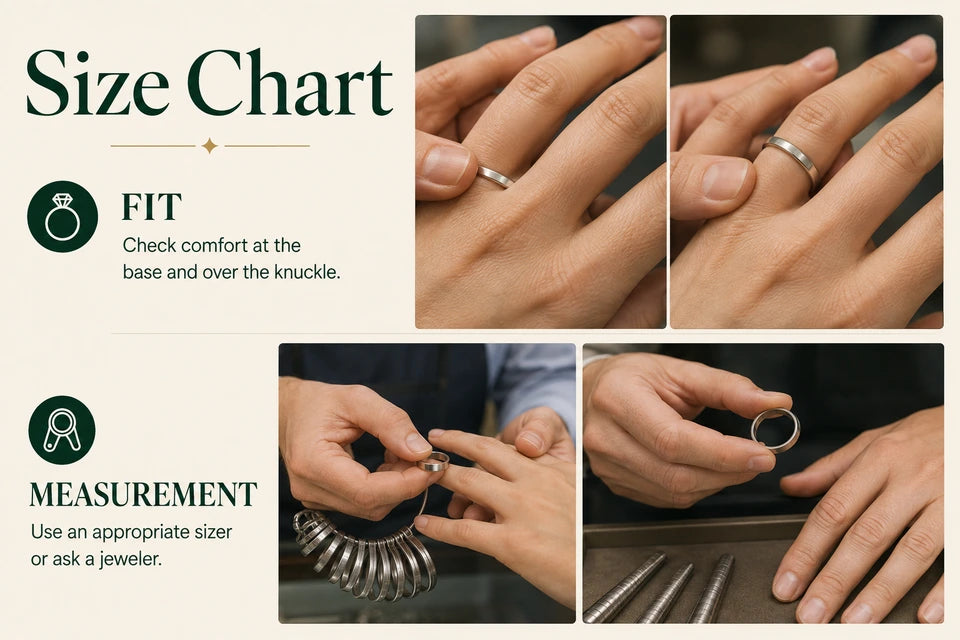
A stone's weight does not translate directly into its visible width, especially when the shapes differ. Ask for the center's length and width, the side stones' dimensions and the full span of the setting. View the ring on a hand close to your ring size, then examine a straight-on view without perspective distortion.
Check the spacing as well. Gaps can make the stones read as separate elements; close placement can create a continuous outline. The setting must leave appropriate room and support for the individual stones.
Choose shapes that work together
Matching shapes
Three round diamonds offer a repeated, symmetrical pattern. Three emerald or Asscher shapes produce broader geometric facets and a more architectural appearance. Matching the outlines does not guarantee matching brightness, so inspect the stones together.
Contrasting shapes
A center diamond with tapered baguette side stones can draw the eye inward. Pear-shaped sides can create a softer taper, while half-moon or trapezoid sides form different transitions to the band. Each combination needs an appropriate setting for its edges and pointed ends.
Use the diamond shape guide to compare outlines, then judge the actual three-stone arrangement. Side-stone shape names alone do not tell you the finished proportions.
Compare appearance and documentation
Look for a relationship you like between the center and side stones' color, transparency and light pattern. Identical grade labels do not necessarily make different shapes look identical. Side stones can also appear different when they tilt away from the center in the finished mounting.
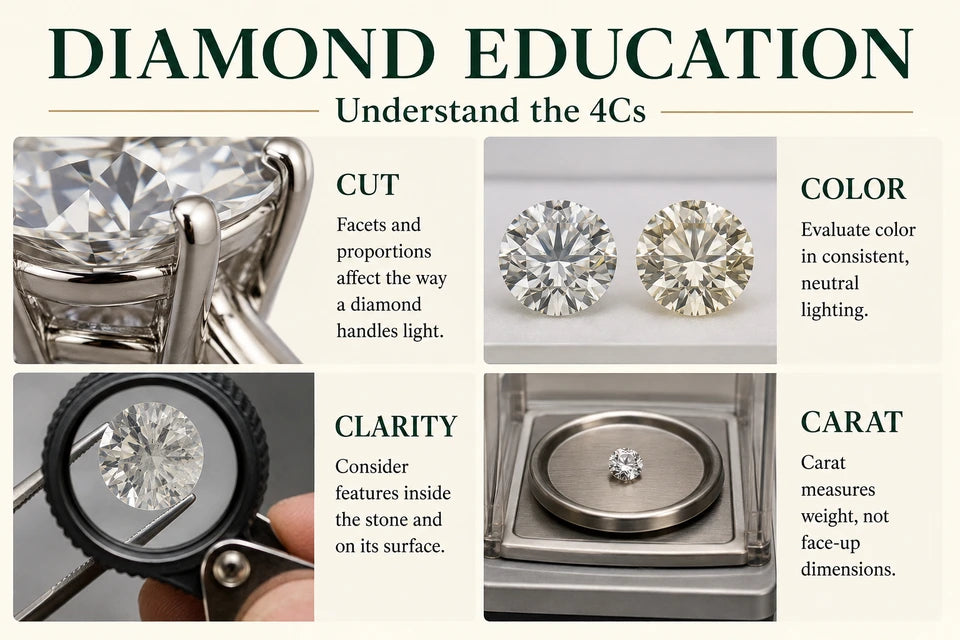
Review each stone in consistent lighting. Confirm which grading report belongs to the center, what documentation is provided for the sides and whether all stones have the same disclosed growth origin. A report for one diamond does not describe every stone in the ring.
The Gemological Institute of America's diamond quality guide explains the main factors. Our four Cs guide turns those factors into a practical comparison of the actual stones.
Look at the setting from the side
The top view tells only part of the story. A shared basket, individual baskets or a raised center can change the ring's height and its fit against a wedding band. Request a clear side view showing the gallery, band and the points where the setting is supported.
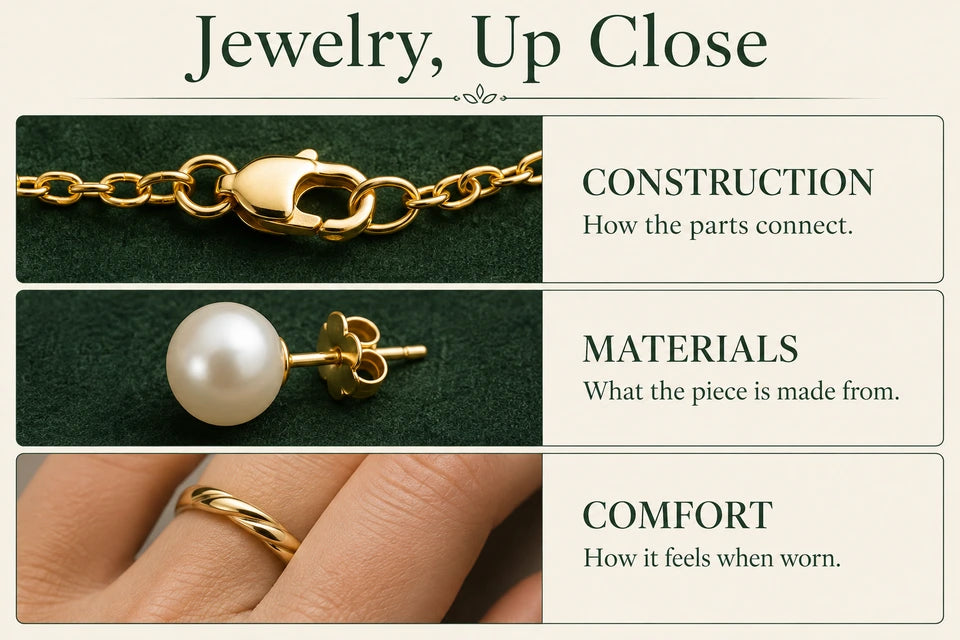
Check how the prongs or bezels secure all three stones, including any corners or tips. Slim-looking metal should still provide suitable support. The side stones should not feel sharp or press uncomfortably against adjacent fingers.
A lower profile can be appealing for everyday wear, but it may prevent a straight wedding band from sitting flush. A higher profile can create clearance while being more noticeable on the hand. Compare the specific construction, rather than assuming one setting style solves both concerns.
Separate center weight from total carat weight
Total carat weight adds the weights of all diamonds included in the stated total. It does not mean the center stone weighs that amount. For example, a ring with a 1.00 ct center and two 0.25 ct side diamonds has 1.50 ct total diamond weight before any additional accents.
Ask for a breakdown by stone or stone group and compare rings on the same basis. A 1.50 ct total three-stone ring and a solitaire with a 1.50 ct center are different designs with different distributions of weight. Neither number alone tells you which will look better on your hand.
Record the setting's full width as well as the individual diamonds' measurements. Three stones can add finger coverage without making the center itself larger; our guide to apparent diamond size explains that distinction.
Check comfort, stacking and care
- Finger coverage: make sure the side stones sit comfortably within the usable width of your finger.
- Wedding-band fit: try the intended band beside the ring and inspect any gap or contact between the settings.
- Rotation: check the fit of a top-heavy design rather than tightening the ring excessively to keep it upright.
- Snagging: examine prong finishing and how exposed the setting feels during ordinary movement.
- Maintenance: ask how to clean beneath all three stones and when the setting should be inspected.
Discuss resizing limitations before ordering, particularly when the shoulders carry additional stones. Cleaning methods should suit the actual stones, treatments and condition of the ring; do not assume every three-stone design tolerates the same equipment.
Questions about three-stone rings
Must the center stone be larger?
No. A larger center is common, but three similar-sized stones create a different balance. Compare the complete outline and how it fits the finger. Choose proportions because you like their appearance, rather than because a design rule says a particular ratio is mandatory.
Will a three-stone ring look bigger than a solitaire?
It can cover more width across the finger, depending on the actual stones and setting. That does not make the center diamond larger. Compare center weight, millimeter dimensions and the entire setting's span separately, then look at both rings on the hand.
Can a straight wedding band sit flush?
Sometimes, but the answer depends on clearance beneath the center and side settings. A low basket can leave a gap; a raised design may allow a straight band beside it. Ask for photographs with a band in place or try the exact combination before deciding.
Compare the complete ring
Shortlist designs with the balance you prefer, then ask for the center and side-stone specifications, full setting dimensions, profile photographs and wedding-band fit. These details are more useful than choosing by total carat weight alone.
Explore Diamond Studio's lab-grown three-stone rings. If two designs look similar, send their product links to Diamond Studio and ask how their stone proportions, height and construction differ.
Compare the specifications of the individual diamond and finished setting. Illustrations show concepts; they do not establish a product’s measurements or quality.