In this article
Quick answer
Most natural diamonds are between about 1 billion and 3.5 billion years old. They formed roughly 150 to 200 km below the surface, in the earth's mantle, where temperatures exceed 1,000°C and the pressure is tens of thousands of times greater than at the surface. Much later, deep-source volcanic eruptions carried them upward through narrow pipes of rock called kimberlite. They are not made from coal, a common myth: the carbon came from the mantle itself.
What conditions does a diamond need to form?
| Condition | In the mantle |
|---|---|
| Depth | About 150 to 200 km, sometimes far deeper |
| Temperature | About 900 to 1,300°C |
| Pressure | About 45,000 to 60,000 times atmospheric |
| Carbon source | Carbon in the mantle, sometimes recycled from the earth's crust |
| Time | Growth over long periods, often in episodes |
Under these conditions carbon atoms bond into the dense, rigid diamond lattice. Under the lower pressure near the surface, carbon forms graphite instead.
How did they reach the surface?

Rare, very deep volcanic eruptions brought magma rich in gas up through the crust at high speed. The magma tore off pieces of mantle rock containing diamonds and carried them up so quickly that the diamonds did not have time to turn into graphite. The eruptions left carrot-shaped pipes of kimberlite or lamproite, which are mined today. Most of these eruptions happened tens to hundreds of millions of years ago, long after the diamonds themselves formed.
Are diamonds made from coal?
No. Coal forms from plant matter near the surface, and most diamonds formed long before land plants existed and far deeper than any coal seam. The idea persists because both are carbon.
How do scientists know their age?
By dating tiny mineral inclusions trapped inside the diamond, such as garnet or sulfide grains, using radioactive isotopes. The diamond preserved them like a time capsule. Some inclusions also show that certain diamonds formed far deeper, below 600 km, which is how scientists learned about the deep mantle. See the inclusions guide.
What does a rough diamond look like?
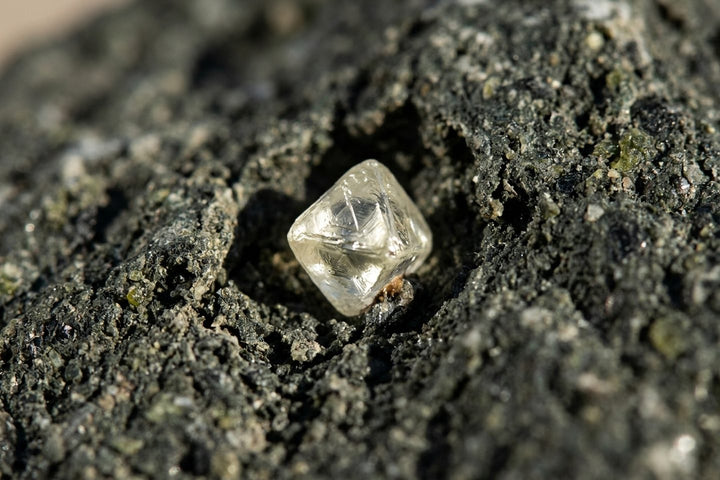
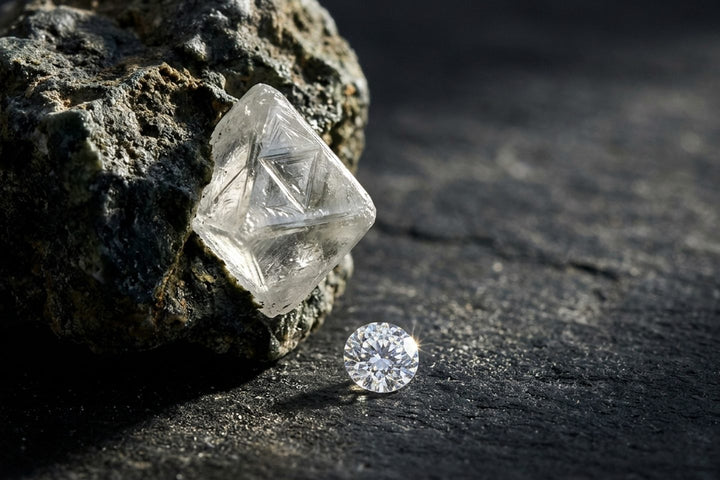
Often an octahedron, like two pyramids joined at the base, with slightly frosted faces and small triangular growth marks called trigons. Others are cubes, flattened triangles called macles, or irregular pieces. Cutters choose a finished shape to keep as much of the rough as possible. See how much weight a diamond loses when cut.
How is this different from a lab-grown diamond?
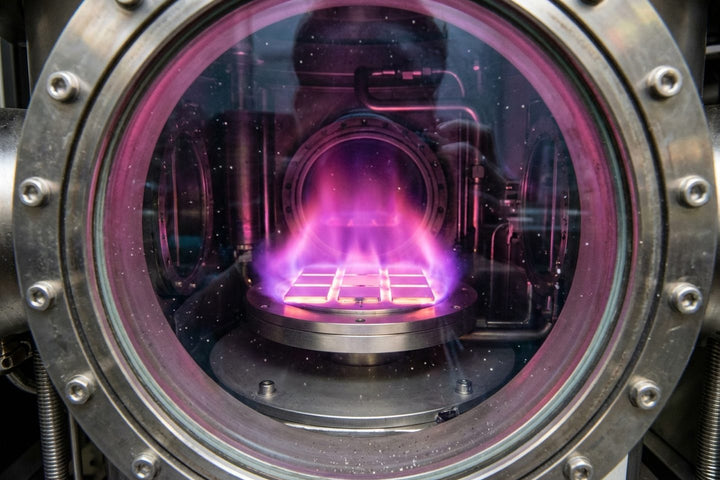
Lab growers recreate the same conditions in weeks, either with high pressure and temperature (HPHT) or by building diamond from carbon-rich gas (CVD). The result is the same material. The difference is age and origin, which is part of the appeal of a natural stone for some buyers. See how lab-grown diamonds are made and CVD vs HPHT.
At Diamond Studio, natural centers from 1 to 3 carats come with a GIA report. Browse engagement rings and read where natural diamonds come from and are diamonds actually rare.
Frequently asked questions
How old is the oldest diamond?
Some natural diamonds have been dated to more than 3 billion years.
Are diamonds still forming today?
Probably, deep in the mantle, but they only reach the surface during rare eruptions, none of which occur today.
Do diamonds come from meteorites?
Tiny diamonds have been found in meteorites and at impact sites, but gem diamonds come from the mantle.
How long does a diamond take to grow?
It varies and can happen in episodes over very long periods. Lab-grown diamonds take weeks.
Is a natural diamond older than a lab-grown one?
Yes, by billions of years. Physically they are the same material.

 IGI certified