In this article
Quick answer
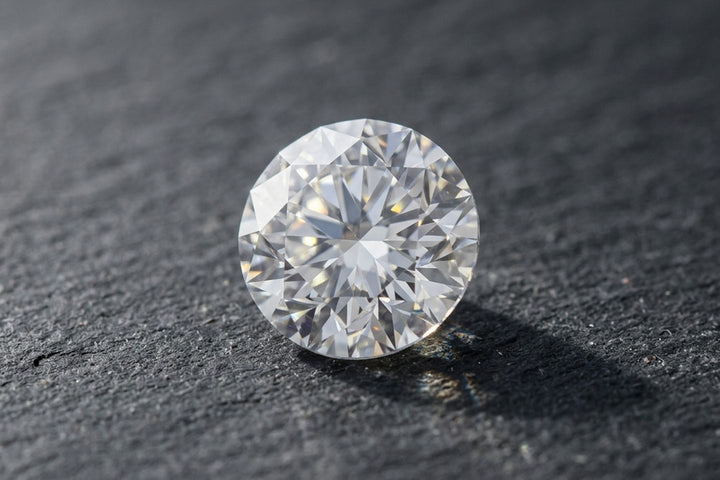
Cut grade measures how well a round diamond's proportions, symmetry and polish return light. GIA's highest grade is Excellent; it does not use the word Ideal. IGI's scale for round diamonds includes Ideal at the top, followed by Excellent. In practice, a GIA Excellent and an IGI Ideal or Excellent all describe a diamond cut to a very high standard. Fancy shapes such as oval or emerald usually receive no overall cut grade, only polish and symmetry.
How do the cut scales compare?
| GIA (round) | IGI (round, lab-grown and natural) | Meaning |
|---|---|---|
| Excellent | Ideal | The top level of light performance |
| Excellent | Excellent | Very high performance |
| Very Good | Very Good | Good light return, small compromises |
| Good | Good | Noticeably less bright |
| Fair, Poor | Fair, Poor | Avoid for an engagement ring |
Each lab has its own exact criteria, so the grades are close equivalents, not identical definitions. See the IGI vs GIA comparison and the certification comparison.
What goes into a cut grade?
- Proportions: table size, crown angle and height, pavilion angle and depth, girdle thickness, total depth.
- Light performance: brightness, fire and scintillation predicted from those proportions.
- Polish: how smooth the facet surfaces are.
- Symmetry: how precisely facets align and meet.

Why does cut matter so much?
Cut is the only one of the four Cs that people actually notice as sparkle. A shallow stone leaks light through the bottom and looks glassy. A deep stone leaks light through the sides, looks darker and faces up smaller. A well-cut stone sends most of the light back through the top. See the diamond cut guide and what diamond spread is.
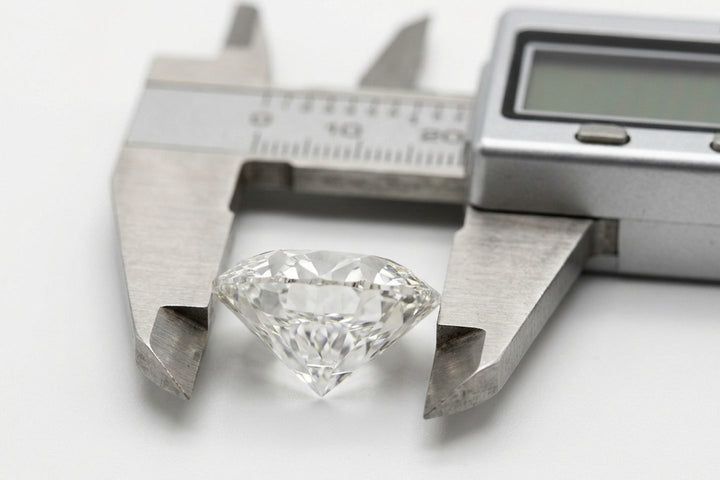
What proportions do top-graded rounds have?
| Measurement | Typical range for top grades |
|---|---|
| Table | About 54 to 58% |
| Total depth | About 59 to 62.5% |
| Crown angle | About 33.5 to 35.5° |
| Pavilion angle | About 40.6 to 41° |
| Girdle | Thin to slightly thick |
These are guides. The lab weighs the whole combination. See the table and depth guide and the symmetry and polish guide.
What about ovals, pears and other shapes?
Most labs do not give fancy shapes an overall cut grade, because there is no single ideal set of proportions for them. The report lists polish and symmetry, and the buyer judges the rest by eye: outline, ratio, bow tie, and how evenly the stone sparkles. See the ratio guide and the bow tie guide.
Is hearts and arrows better than Ideal?
Hearts and arrows describes a pattern visible in a viewer when a round diamond's facets are extremely precisely aligned. It indicates excellent optical symmetry. It is a refinement within the top grades, not a separate grade. See the hearts and arrows guide.
How should you use cut grade when buying?
- For a round, choose GIA Excellent or IGI Ideal or Excellent.
- Check polish and symmetry: Excellent or Very Good.
- For fancy shapes, watch a video and check proportions and ratio.
- Spend on cut before color and clarity beyond eye-clean. See what an eye-clean diamond is.
At Diamond Studio, lab-grown centers come with an IGI report and natural centers with a GIA report. Browse round lab-grown engagement rings and read which shape sparkles the most and the 4 Cs.
Frequently asked questions
Is IGI Ideal better than GIA Excellent?
They are both top grades on different scales. Neither is a step above the other.
Is a Very Good cut acceptable?
It can be, especially in larger stones where it saves money, but compare sparkle on video.
What is triple excellent?
Excellent cut, polish and symmetry together. It is a common shorthand for a top-performing round.
Are lab-grown diamonds cut better?
Not inherently. Many are cut to high standards, but each stone should be judged on its report.
Is cut the same as shape?
No. Shape is the outline. Cut grade is how well the facets are proportioned and finished.

 IGI certified