In this article
Quick answer
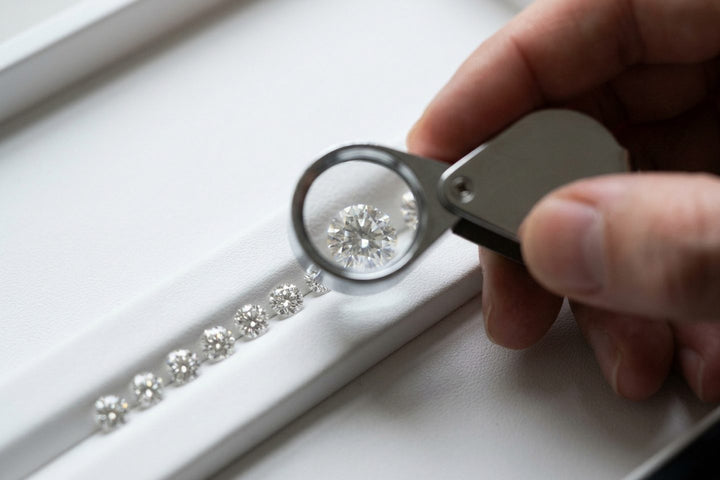
An eye-clean diamond is one in which you cannot see any inclusions with the naked eye, face-up, at a normal viewing distance of about 10 to 12 inches. It is not a laboratory grade but a practical standard. Diamonds graded VS2 or higher are almost always eye-clean, and many SI1 stones are too, depending on shape and where the inclusions sit. Because nobody looks at a ring through a microscope, eye-clean is the clarity goal that matters for most buyers.
Which clarity grades are eye-clean?
| Clarity grade | Typically eye-clean? |
|---|---|
| FL, IF | Always. No inclusions at 10x |
| VVS1, VVS2 | Always. Very hard to see even at 10x |
| VS1, VS2 | Almost always |
| SI1 | Often, especially in brilliant shapes |
| SI2 | Sometimes, check each stone |
| I1 to I3 | Rarely |
See the clarity chart, the VS clarity guide and the SI clarity guide.

What decides whether a stone is eye-clean?
- Shape. Brilliant shapes hide inclusions; step cuts show them. See which shapes hide inclusions best.
- Size. Bigger stones have bigger facets, so inclusions are easier to see.
- Position. Under the table is most visible; near the edge, least.
- Type and color. Dark crystals show more than white feathers or pinpoints.
- Body color. Colored diamonds disguise inclusions. See clarity in colored diamonds.
How do you check a stone you have not seen in person?
- Ask for a video taken face-up in daylight, at normal size.
- Study the plotting diagram on the report to see where inclusions sit. See how to read an IGI certificate.
- Read the comments on the report, such as "clouds not shown".
- Ask the jeweler directly whether the stone is eye-clean.
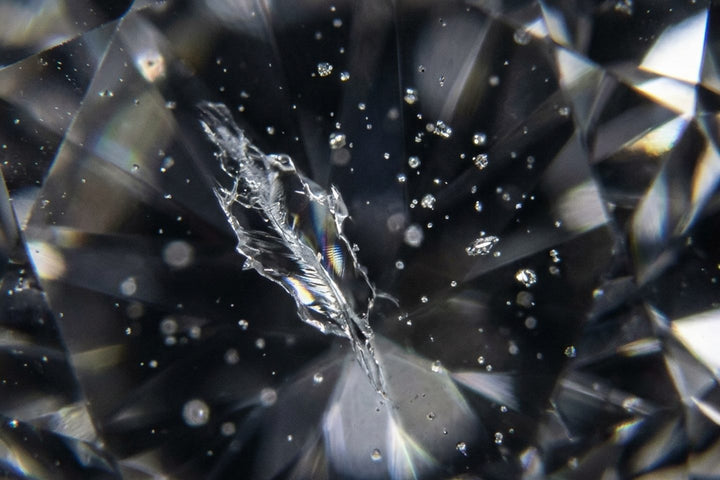
- Be wary of zoomed photos. High-magnification images show inclusions you would never see on the hand.
Can an eye-clean stone still have a problem?
Occasionally. A feather that reaches the surface near a point or corner can be a weak spot even if you cannot see it. Large clouds can reduce brilliance slightly without being visible as a mark. A good report and a jeweler's opinion cover both. See the inclusions guide.
Why aim for eye-clean rather than flawless?
Because the extra money buys nothing you can see. Spending on cut, which drives sparkle, or on size, which you notice every day, usually makes a ring look better than spending on clarity beyond eye-clean. See getting a bigger diamond without sacrificing clarity.
Are lab-grown diamonds usually eye-clean?
They are widely available in VS and VVS grades, so eye-clean stones are easy to find. They can have their own types of inclusions, which are graded the same way. See do lab-grown diamonds have inclusions.
At Diamond Studio, lab-grown center diamonds are offered in grade combinations including E/VS1, E/VVS2 and D/VVS2. Browse lab-grown diamond engagement rings and all engagement rings, and see D vs E vs F color.
Frequently asked questions
Is an SI1 diamond worth buying?
If it is eye-clean, yes. Check each stone individually.
What distance counts as eye-clean?
About 10 to 12 inches, roughly how far you hold a ring to look at it.
Should I inspect with a loupe?
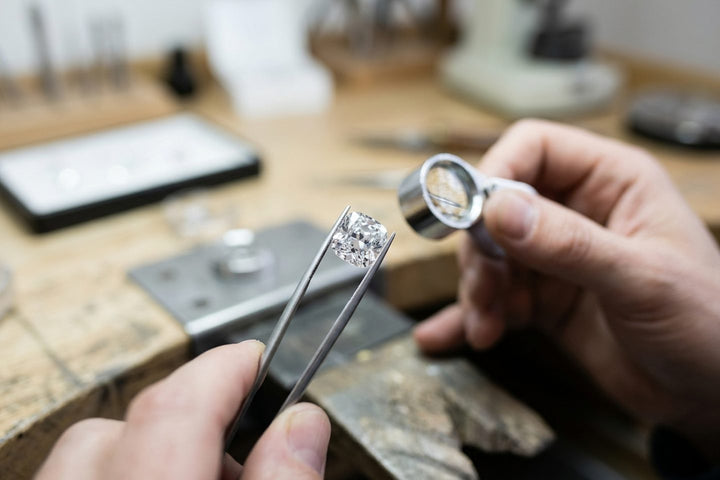
A loupe is useful to understand the stone, but eye-clean is judged without one.
Is eye-clean harder for an emerald cut?
Yes. Aim for VS2 or better in step cuts.
Does the report say eye-clean?
No. It gives the clarity grade and a diagram. Eye-clean is a judgment you or your jeweler make.

 IGI certified