In this article
Quick answer
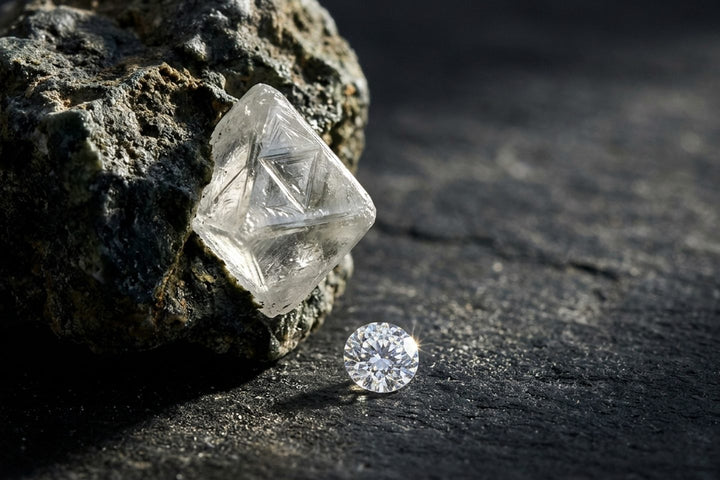
Because for some people, where a diamond came from is part of what it means. Natural diamonds formed deep in the earth over a billion years or more, supply is finite, and they carry a long tradition. They also keep more of their value on resale than lab-grown diamonds, though neither is an investment. Lab-grown diamonds are real diamonds with the same look and hardness at a lower cost, and they are now the majority choice for engagement rings in the US. Neither choice is wrong; it depends on what matters to you.
What are the main reasons?
| Reason | What buyers say |
|---|---|
| Rarity | Finite natural supply feels special |
| Age and origin | A stone formed over a billion years ago |
| Tradition | Matches family rings or expectations |
| Relative value | Holds more resale value than lab-grown |
| Community impact | Mining supports jobs in producer countries such as Botswana |
| Heirloom feeling | Wants a stone that feels irreplaceable |

Is rarity real?
Yes. Natural diamond production comes from a limited number of mines, and large high-quality crystals are uncommon. Lab-grown production can be scaled up. See where natural diamonds come from and how old natural diamonds are.
Does a natural diamond hold value?
Better than lab-grown, but not fully. Resale offers are usually well below the retail price, and natural prices have softened in recent years. Lab-grown resale value is very low. See what a natural diamond is worth second-hand and will lab-grown prices keep falling.
Is natural more or less ethical?
It depends on sourcing. Responsibly mined diamonds support economies in producer countries; poorly managed mining harms people and land. Lab-grown avoids mining but uses a lot of energy. Ask about documented origin and energy sources. See can you trace where a diamond was mined and the ethical diamond guide.
How do you decide?
- Choose natural if origin, rarity and tradition matter most to you.
- Choose lab-grown if you want the largest, highest-grade diamond for your budget.
- Compare in person or on video: they look the same. See can a jeweler tell them apart.
Read lab-grown diamond myths and is it okay to propose with lab-grown.
Which can you choose at Diamond Studio?
Both. Natural centers from 1 to 3 carats come with a GIA report; lab-grown centers from 1 to 8 carats come with an IGI report. Browse engagement rings, natural round and natural oval styles, and the natural diamond guide.
Frequently asked questions
Is a natural diamond better than lab-grown?
Not physically. They are the same material; the difference is origin, price and value retention.
Are natural diamonds still popular?
Yes. Many couples still choose natural, though lab-grown is now the majority for US engagement rings.
Will I get a smaller diamond if I choose natural?
Usually, for the same budget.
Can a ring mix natural and lab-grown?
It is possible, but most rings use one type throughout.
What if my partner prefers natural?
Talk about it early. Preference matters more than price for a ring worn every day.

 IGI certified