Introduction
Lab Grown Diamond Buying Guide Reviewed by Diamond Studio Education Team | Last updated June 2026 Lab grown diamonds are real diamonds created in controlled laboratory conditions. They have the same carbon crystal structure as mined diamonds and can be graded for cut, color, clarity, and carat weight by independent laboratories such as IGI or GIA.
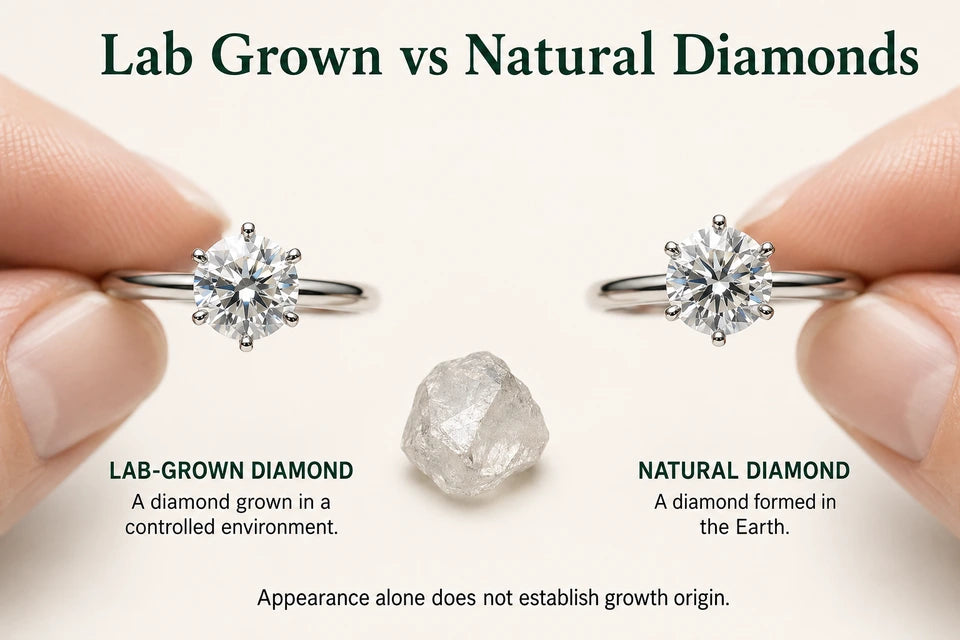
Lab grown vs natural diamonds
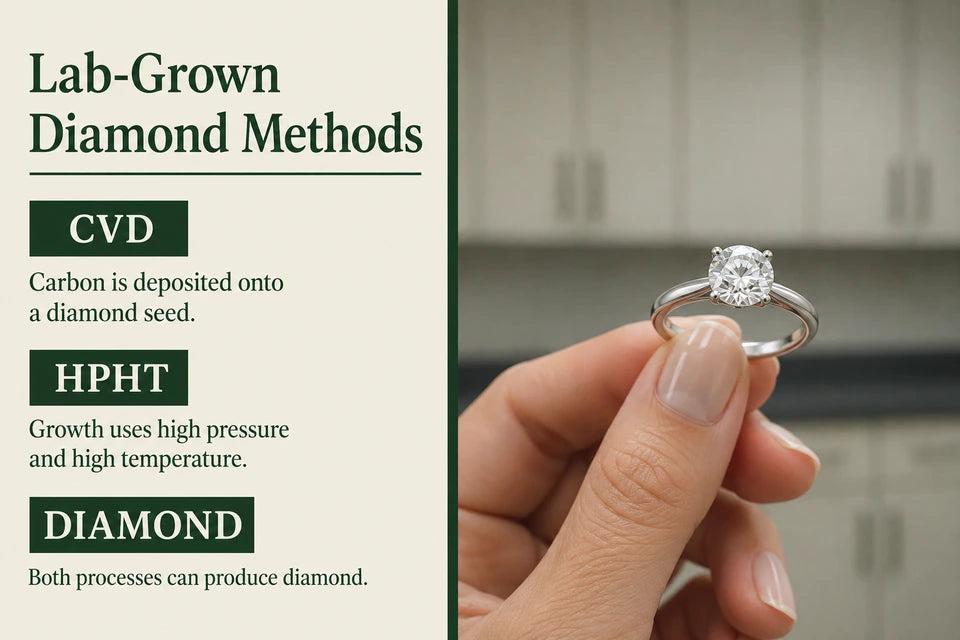
The biggest difference is origin. Natural diamonds form underground over long periods of time, while lab grown diamonds are created through advanced growth methods such as CVD or HPHT. For most shoppers, lab grown diamonds offer a larger look for the same budget while keeping the brilliance and durability expected from a diamond.
Start with cut quality
Cut has the strongest effect on sparkle. For round diamonds, prioritize excellent or ideal cut grades. For fancy shapes such as oval, radiant, emerald, pear, marquise, cushion, princess, and asscher, compare symmetry, proportions, bow-tie visibility, and how lively the stone appears in photos or video.
Choose color by metal and preference
D to F color grades are very bright and colorless. G to H can still face up beautifully, especially in yellow gold or rose gold settings. If you want the whitest appearance in platinum or white gold, stay near the colorless range.
Choose clarity by what is visible
VS1 and VS2 diamonds are popular because inclusions are usually difficult to see without magnification. For larger stones or step cuts such as emerald and asscher, inspect clarity more carefully because inclusions can be easier to notice.
Balance carat weight and appearance
Carat is weight, not size. Shape and cut determine how large a diamond appears on the hand. Oval, pear, marquise, and radiant diamonds can look visually larger than some round diamonds of the same carat weight.
Compare IGI and GIA reports
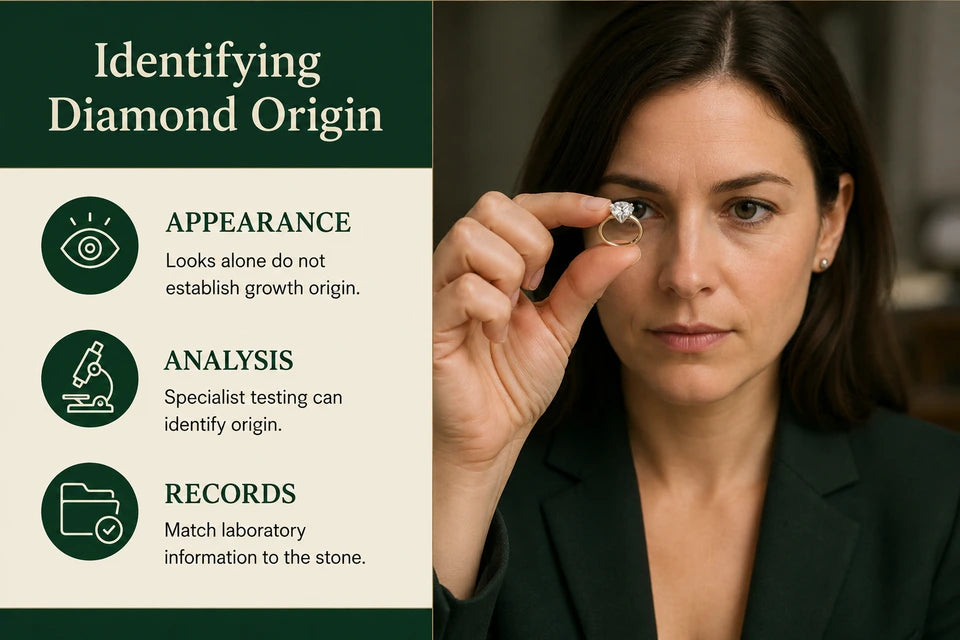
IGI and GIA reports help confirm a diamond's identity and grading details. Use the report number, measurements, color, clarity, and growth method to compare stones. A grading report is especially important for higher-value purchases.
Match the setting to daily wear
Solitaire settings keep attention on the center stone. Pave and halo designs add extra sparkle. Three-stone and bridal set designs create a more detailed look. If the ring will be worn every day, consider prong security, band width, profile height, and metal durability.
Buying checklist
Confirm the diamond is clearly labeled as lab grown. Review the grading report when available. Compare cut, color, clarity, carat weight, measurements, and shape. Check the return, resizing, shipping, warranty, and appraisal policies. Choose a setting that fits the wearer's style and daily routine.
Every piece has its own specifications. Consult the product details and any accompanying grading report when comparing individual jewelry.
Original page address ↗