In this article
Quick answer
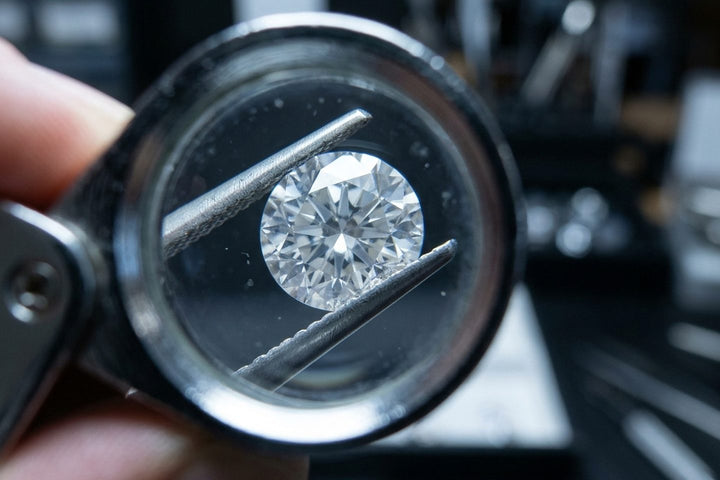
VVS means "very, very slightly included." A VVS diamond has inclusions so small that a skilled grader has trouble finding them even at 10x magnification. VVS1 is cleaner than VVS2. VVS diamonds are rare and priced accordingly, but they look exactly as clean to the naked eye as VS diamonds, which is why most buyers get better value from VS clarity.
| Grade | What a grader sees at 10x |
|---|---|
| FL / IF | No inclusions (IF may have tiny surface blemishes) |
| VVS1 | Minute inclusions, extremely difficult to see, often only through the pavilion |
| VVS2 | Minute inclusions, very difficult to see |
| VS1 / VS2 | Minor inclusions, difficult to somewhat easy to see |
What VVS1 and VVS2 mean
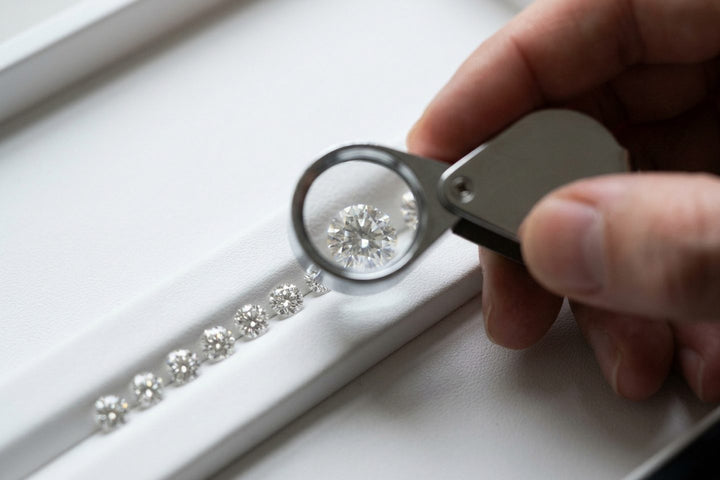
Clarity is graded at 10x magnification on a scale from Flawless (FL) and Internally Flawless (IF) down through VVS, VS, SI and I. VVS sits just below IF. Typical VVS inclusions are tiny pinpoints, a faint cloud or a hair-fine feather, so small that they need a trained eye and careful angling to locate. In a VVS1 diamond they are usually visible only when the stone is viewed from the pavilion (the underside); in a VVS2 diamond they can be seen face up with effort. See our diamond clarity chart.
Does a VVS diamond look better?
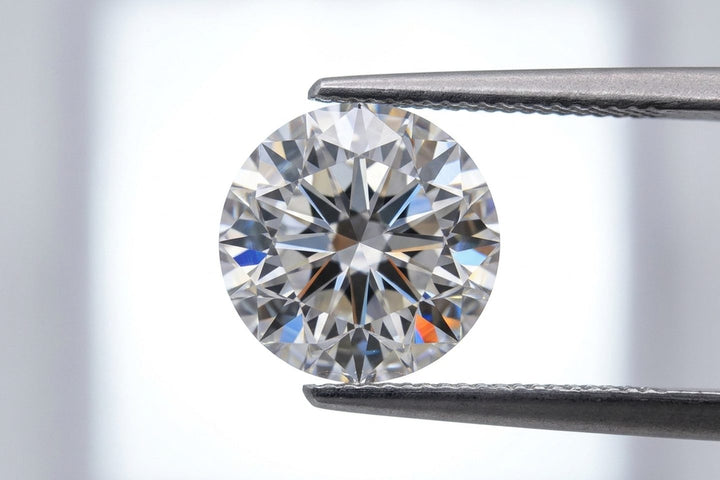
Not to the eye. A VVS diamond and a well-chosen VS diamond both look completely clean when worn, and clarity has almost no effect on sparkle at these grades. Brilliance and fire come from the cut. The difference between VVS and VS is visible only under magnification, which is what the higher price reflects: rarity, not visible beauty. Compare in our VS clarity guide.
When VVS can make sense
- You value rarity and the knowledge that the diamond is nearly flawless.
- You are buying a very large step-cut diamond, where open facets make every detail more visible.
- You plan to have the stone viewed under magnification, for instance as a collector piece.
For most engagement rings, the money is better spent on cut quality, carat or the setting.
VVS in lab-grown diamonds
High clarity is more common in lab-grown diamonds than in mined ones, so VVS lab-grown stones are easier to find and cost less than VVS natural stones. The grading standard is the same; check the IGI or GIA report and its laser inscription. See IGI vs GIA.
Why Diamond Studio sets VS1 to VS2
We set only VS1 and VS2 center diamonds, in D to F color. At those grades a diamond looks just as clean as a VVS stone, and the savings go into a better cut, a larger size or a finer setting. Browse our engagement rings or learn how clarity fits with the other grades in the 4 Cs of diamonds.
Frequently asked questions
Is a VVS diamond worth it?
For most buyers, no. VVS diamonds cost more than VS diamonds but look identical to the naked eye. The premium pays for rarity rather than visible beauty.
What is the difference between VVS1 and VVS2?
Both have minute inclusions. In VVS1 they are extremely difficult to see at 10x, often only from the underside; in VVS2 they are very difficult but possible to see face up under magnification.
Does clarity affect a diamond's sparkle?
At VS and above, essentially no. Sparkle comes from the cut. Only heavy inclusions, at SI2 and I grades, can block light enough to dull a diamond.
Should I choose VVS or VS?
Choose VS for the best value, since it is eye-clean. Consider VVS only if rarity matters to you or for a very large step-cut diamond.

 IGI certified