In this article
Quick answer
Diamonds resist scratching better than any other material, but they can chip if struck at a thin edge. The shapes most at risk are the ones with sharp points: marquise (two points), pear (one point), princess (four sharp corners) and heart (a point and a cleft). Round, oval and cushion shapes have no points and are the most durable. Emerald, asscher and radiant cuts have cropped corners and are also low risk. Any pointed shape is safe for daily wear when its points sit under a V-shaped prong or inside a bezel.
Which shapes are most at risk?
| Shape | Weak points | Risk level | Best protection |
|---|---|---|---|
| Marquise | Two sharp tips | Highest | V-prongs on both tips, or a bezel |
| Pear | One sharp tip | High | V-prong on the tip |
| Princess | Four sharp corners | High | V-prongs on each corner |
| Heart | Tip and cleft | High | V-prong on the tip, prong at the cleft |
| Trillion | Three corners | Moderate to high | V-prongs or bezel |
| Emerald, asscher, radiant | None (corners cropped) | Low | Standard prongs |
| Round, oval, cushion | None | Lowest | Standard prongs |

Why do diamonds chip if they are so hard?
Hardness and toughness are different. Diamond is the hardest material, so nothing in daily life scratches it. But it can split along natural planes in the crystal, called cleavage planes, if it is hit hard at the right angle. A thin point concentrates the force of a knock into a tiny area, which is why tips and corners chip first. A thin girdle, the stone's outer edge, adds risk too. See the girdle guide and are lab diamonds durable.
Which settings protect diamonds best?
- V-prongs fold around a point or corner like a shield. They are the standard answer for marquise, pear and princess cuts.
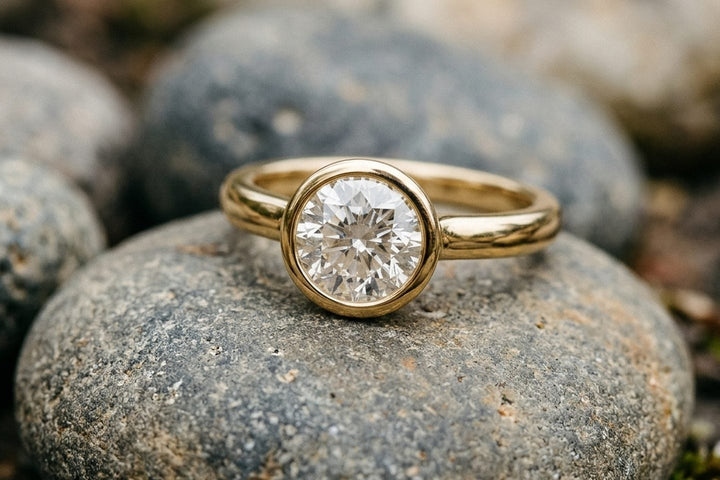
- Bezels surround the whole edge with metal. The most protective option for any shape. See the bezel guide.
- Halos place a ring of small diamonds around the center, which take knocks first.
- Low profiles keep the stone closer to the finger and out of harm's way. See high vs low profile rings.
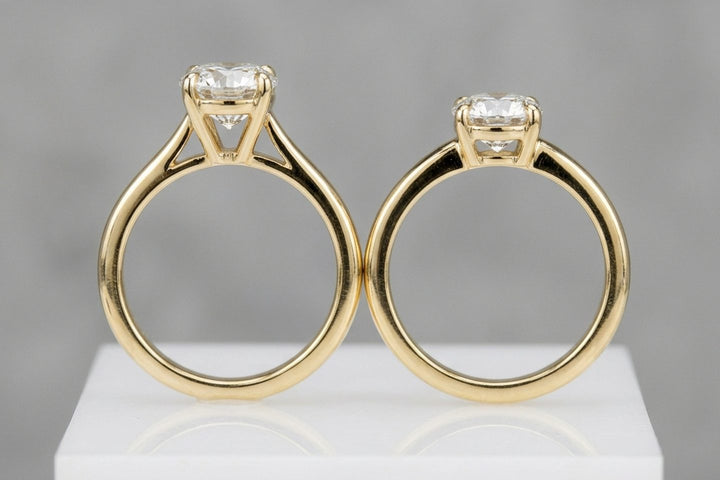
- Six prongs instead of four cover more of the edge and hold the stone more securely.
Which daily habits prevent chips?
- Take rings off for the gym, sports, gardening and moving furniture.
- Do not store diamonds loose together. A diamond can chip another diamond.
- Have prongs checked once a year. A loose stone can rattle and chip. See how often jewelry should be inspected.
- Be careful with hard surfaces like granite counters and door frames, especially with pointed shapes.
Should you avoid pointed shapes?
No. Pear and marquise diamonds are worn every day by many people for decades. Choose them with the right setting and you take on very little extra risk. If the wearer works with their hands, a bezel or a halo is a good match. For more on each shape, read oval vs pear and princess vs cushion.
What if a diamond does chip?
A small chip can often be hidden under a prong or polished away with a slight loss of weight. A large chip usually means recutting or replacing the stone. Insurance covers this in many policies, so keep your report and photos. See can a diamond chip and the insurance guide.
Browse protective designs in halo rings and hidden halo rings, or shapes in pear, marquise and princess.
Frequently asked questions
What is the most durable diamond shape?
Round, followed closely by oval and cushion.
Do lab-grown diamonds chip more easily?
No. They have the same hardness and toughness as natural diamonds.
What is a V-prong?
A prong shaped like a V that wraps around a point or corner to protect it.
Does a bezel reduce sparkle?
Slightly, since it covers the edge. Most people find the trade worthwhile for an active life.
Is a heart-shaped diamond safe for daily wear?
Yes, with its point protected. See the heart shape guide.

 IGI certified