In this article
Quick answer
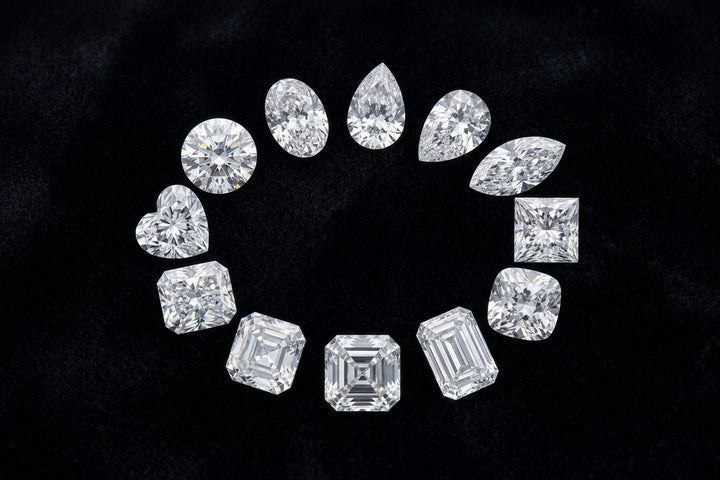
The marquise looks biggest per carat, followed closely by the pear and the oval. These elongated shapes spread their weight along a long, fairly shallow outline, so more of the diamond faces up. A marquise can show roughly 10 to 15 percent more surface than a round of the same weight. Square shapes such as princess, asscher and cushion look smallest, because they carry more weight in their depth. Round sits in the middle.
How do the shapes rank?
| Rank | Shape | Typical size at 1 ct | Approximate face-up area vs round |
|---|---|---|---|
| 1 | Marquise | 10 × 5 mm | About 10 to 15% larger |
| 2 | Pear | 8.5 × 5.5 mm | About 5 to 10% larger |
| 3 | Oval | 7.7 × 5.7 mm | About 5 to 10% larger |
| 4 | Heart | 6.5 mm | Similar |
| 5 | Round | 6.5 mm | Reference |
| 6 | Emerald | 7 × 5 mm | Similar to slightly smaller |
| 7 | Radiant | 6.5 × 5.5 mm | Slightly smaller |
| 8 | Cushion | 5.8 mm | Smaller |
| 9 | Princess and asscher | 5.5 mm | Smallest |
Individual stones vary with cut and proportions, so treat these as typical. See the mm to carat chart and what diamond spread is.

Why do elongated shapes look bigger?
- Length. The eye reads the longest dimension first. A 10 mm marquise reads as big even though it is only 5 mm wide.
- Shallower depth. Elongated shapes are usually cut less deep than squares, so less weight hides underneath.
- The finger. A long shape set north-south follows the finger and makes it look slimmer, which adds to the impression of size.
What are the trade-offs?
| Shape | Why it looks big | What to watch |
|---|---|---|
| Marquise | Longest outline | Two fragile points need protecting. Bow tie possible. |
| Pear | Long with a soft end | One point to protect. Bow tie possible. |
| Oval | Long, no points | Bow tie possible. Check the length-to-width ratio. |
| Emerald | Broad flat top | Shows inclusions, needs good clarity. |
A bow tie is a darker band across the middle of elongated brilliants. A mild one is normal. See the bow tie guide and the ratio guide.
Does the length-to-width ratio matter?
Yes. Within one shape, a longer, slimmer stone looks larger than a wider one of the same weight. Typical favorites:
- Oval: about 1.35 to 1.50
- Pear: about 1.50 to 1.70
- Marquise: about 1.85 to 2.10
- Emerald: about 1.35 to 1.50
Go much longer and the shape can look thin. Go much shorter and it looks stubby.
Can the setting make any shape look bigger?
Yes. A halo adds apparent size to any shape. A thin band makes the center look larger by contrast. White metal prongs blend into the stone. See how to make a diamond look bigger and halo rings.
Should you choose a shape for size alone?
No. Choose the shape you love, then use the ranking to understand what each carat weight will look like. A princess cut that she adores is better than a marquise she merely tolerates. For help, see the diamond shapes guide and diamond shapes and meanings.
Compare shapes on real rings: marquise, pear, oval, round, cushion and princess. At Diamond Studio the shape you choose does not change the price of the center diamond.
Frequently asked questions
Which shape looks biggest for the money?
Marquise, then pear and oval.
Does an oval look bigger than a round?
Yes. A 1 carat oval is longer than a 1 carat round and usually covers more of the finger.
Which shape looks smallest?
Princess and asscher, because they carry more weight in depth.
Does an emerald cut look big?
Its broad, flat top looks generous, roughly similar to a round of the same weight.
Does turning an oval sideways make it look bigger?
It makes it look wider across the finger and distinctive. Whether it looks bigger depends on the hand. See the east-west guide.

 IGI certified