In this article
Quick answer
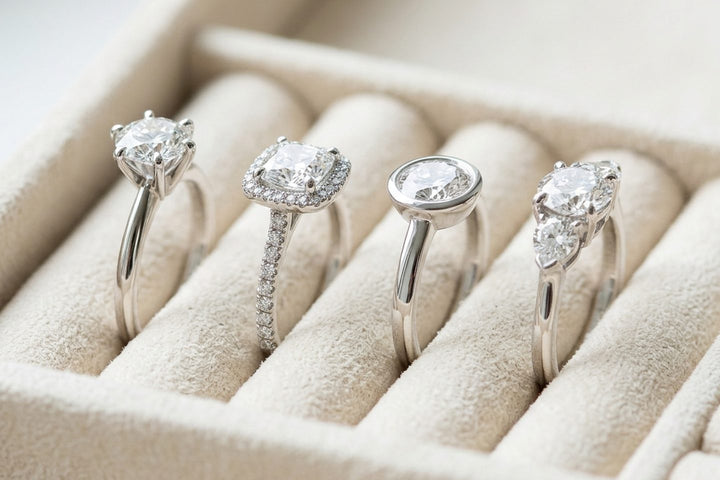
Four prongs show more of the diamond, look clean and modern, and can make a round stone look slightly square from above. Six prongs grip the stone at more points, so it stays secure even if one prong is damaged, and they keep a round looking perfectly round, though the stone shows slightly less. For an everyday ring on an active hand, six prongs offer more security; for maximum visible diamond, four prongs. Either is reliable when made and maintained well.
How do they compare?
| 4 prongs | 6 prongs | |
|---|---|---|
| Visible diamond | More | Slightly less |
| Outline from above | Can look slightly square | Stays round |
| Security | Good | Higher; backup if one fails |
| Snagging | Fewer points to catch | More points |
| Cleaning | Easier | More gaps to collect dirt |
| Small stones | Better balance | Can crowd a small diamond |
| Large stones | Fine with sturdy prongs | Popular for extra security |

Does the shape matter?
- Round: both work; it is a style choice.
- Oval, cushion, radiant: four prongs are typical, sometimes with double prongs.
- Princess: four V-shaped prongs to protect the corners.
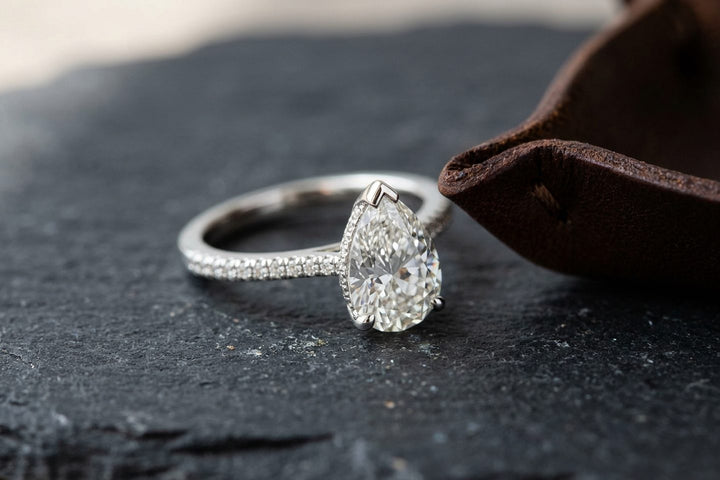
- Pear and marquise: a V-prong at each point plus side prongs.
See which shapes chip most easily and the engagement ring settings guide.
What prong tips are there?
Round (claw) tips are the most common. Claw or pointed tips look delicate. Tab or flat tips are sturdier. Double prongs give extra security on larger stones. Compass prongs sit at north, south, east and west.
How do you keep prongs secure?
- Have prongs checked every six to twelve months.
- Listen for the stone rattling and look for snagging on fabric.
- Take rings off for heavy lifting, gym work and gardening.
- Re-tip worn prongs before they fail.
See the jewelry care guide and everyday wear tips.
Where can you see both styles?
Browse solitaire rings, solitaire engagement rings and hidden halo rings. For a lower, fully protective option, see the bezel guide.
Frequently asked questions
Are six prongs safer than four?
Yes, slightly, because the stone stays held if one prong breaks.
Do four prongs make a diamond look bigger?
A little, because less metal covers the edge.
What is a classic six-prong solitaire?
A round diamond raised on six slim prongs; the style became iconic in the late 1800s.
Can I change from four to six prongs later?
Often, by replacing the head of the setting.
Do six prongs snag more?
Slightly more points can catch, but smooth tips reduce snagging.

 IGI certified