In this article
Quick answer
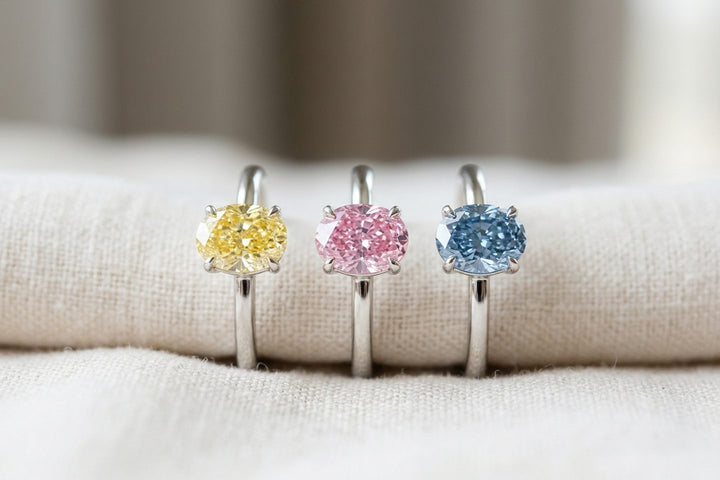
A blue diamond is a real diamond that looks blue because a tiny amount of boron is built into its crystal. Boron absorbs red and yellow light, so the stone shows blue. Natural blue diamonds are among the scarcest of all gems and the most famous one, the Hope Diamond, sits in a museum. Lab-grown blue diamonds are made with the same element and give the same color in sizes and prices suited to an engagement ring.
What makes a diamond blue?
Boron. It takes very little: a few boron atoms for every million carbon atoms are enough to tint the whole crystal. The more boron, the deeper the blue.
Boron also changes how the diamond behaves. Blue diamonds conduct electricity, which no other diamond color does, and gem labs use that property as one of their tests.

Why are natural blue diamonds so rare?
Boron is plentiful at the earth's surface and almost absent at the depths where diamonds form. Research on natural blue diamonds suggests they grew far deeper than most other diamonds, in places where boron had been carried down from ancient sea floors. Very few diamonds formed under those conditions, and fewer still reached the surface.
In practice a handful of mines have produced nearly all of them, most notably the Cullinan mine in South Africa. Stones with strong, pure color are rare enough that each one is an event when it comes to auction.
What shades do blue diamonds come in?
| Shade | What it looks like | Notes |
|---|---|---|
| Light blue | Icy, like a clear sky | Subtle, reads white from a distance |
| Fancy blue | Clear sky blue | Obvious color, easy to wear |
| Fancy Intense blue | Bright, saturated blue | The look most people expect |
| Fancy Vivid blue | The strongest pure blue | Rarest and most valuable |
| Grayish or greenish blue | Steel or teal tones | Common in natural stones, usually less costly |
For what the grade words mean, see Fancy vs Fancy Intense vs Fancy Vivid.
What drives the cost of a blue diamond?
- Natural or lab grown. This is the largest factor by far. Natural blues are priced as collector's gems. Lab-grown blues are priced a little above lab-grown white diamonds of the same size.
- Strength of color. Each step from Fancy to Fancy Intense to Fancy Vivid adds to the price.
- Purity of hue. A report that says simply "blue" is worth more than "grayish blue".
- Carat weight. Price rises with size as it does for any diamond.
- Clarity and cut. These matter, but less than color.
Are lab-grown blue diamonds real?
Yes. Growers add a measured amount of boron while the crystal forms, so the diamond grows blue all the way through. It is the same cause of color as in nature. The grading report identifies the stone as laboratory grown.
You may have read about a faint blue tint in some white lab-grown diamonds. That is a separate topic: a trace of boron that was not intended. Our article on the boron blue tint explains it, and how colored lab-grown diamonds are made covers intended color.
How should a blue diamond be set?
- White gold or platinum is the classic choice. The cool metal keeps the blue crisp. See the white gold vs platinum guide.
- Yellow gold gives strong contrast and a vintage feel, and can make a light blue look slightly greener.
- White diamond side stones frame the color. Browse three-stone rings such as the Taperisse baguette three-stone ring, and halo rings.
- Shape. Oval, cushion and radiant cuts deepen the color. An emerald cut shows it as broad, calm flashes. Compare oval, radiant and emerald cut rings.
At Diamond Studio, blue center diamonds are lab grown and available from 1 to 8 carats. Browse blue diamond engagement rings, open the Melina hidden halo pavé ring in blue, or read the fancy colored diamonds guide.
Frequently asked questions
Is a blue diamond the same as a sapphire?
No. Sapphire is a different mineral. A blue diamond is harder, has more fire and usually shows a lighter, brighter blue than the deep velvet blue of a fine sapphire.
What is the Hope Diamond?
A 45.52 carat deep blue natural diamond kept at the Smithsonian in Washington. It is the best-known blue diamond in the world.
Do blue diamonds glow in the dark?
Some keep glowing for a short time after strong ultraviolet light is switched off. This is called phosphorescence and is harmless. You will not see it in everyday lighting.
Will the blue color fade?
No. Color caused by boron is part of the crystal and is stable.
What does a blue diamond symbolize?
Trust, loyalty and calm. It also covers "something blue" for a wedding.

 IGI certified