In this article
Quick answer
Magic sizes are the round-number carat weights where diamond prices jump: mainly 0.5, 0.75, 1, 1.5, 2, 3 and 5 carats. Because buyers want the number, a 1.00 carat stone can cost noticeably more than a 0.95 that looks the same on the hand. Buying just under a magic size is one of the oldest ways to save. With lab-grown diamonds the effect is smaller, since prices per carat are lower and flatter, but it still exists, and many lab-grown centers are sold in whole-carat steps anyway.
Which weights are magic sizes?
| Magic size | Smart range just below it | Diameter difference for rounds |
|---|---|---|
| 0.50 ct | 0.45 to 0.49 ct | About 0.1 to 0.2 mm |
| 1.00 ct | 0.90 to 0.99 ct | About 0.1 to 0.2 mm |
| 1.50 ct | 1.40 to 1.49 ct | About 0.1 to 0.2 mm |
| 2.00 ct | 1.85 to 1.99 ct | About 0.1 to 0.2 mm |
| 3.00 ct | 2.80 to 2.99 ct | About 0.1 to 0.2 mm |
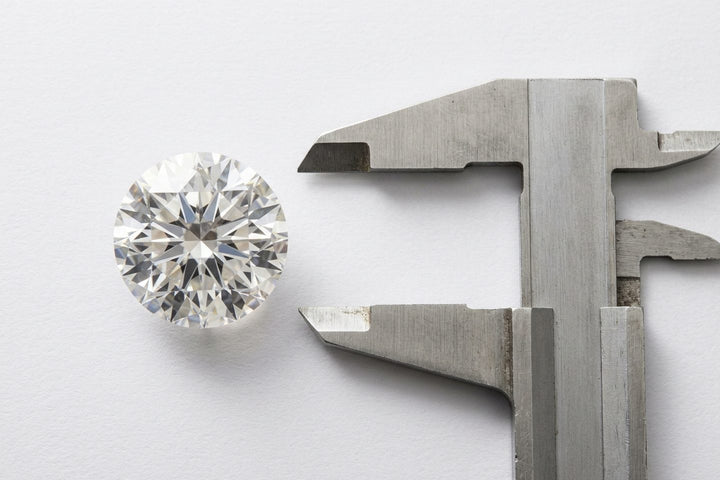
A tenth or two of a millimeter is invisible without a measuring tool. See the mm to carat chart.

Why do prices jump at round numbers?
- Demand. Buyers ask for "a one carat" or "a two carat", so stones that meet the number sell faster.
- Price lists. Natural diamond price guides are organized in weight brackets, and the price per carat steps up at each bracket.
- Cutting decisions. Cutters often keep extra weight to reach a magic size, even at the cost of proportions. A 1.01 carat stone is sometimes a slightly deep stone that faces up like a 0.95.
That last point matters: a stone just over a magic size can actually look smaller than one just under it. See what diamond spread is.
How much can you save by buying just under?
With natural diamonds, the step at 1 carat and 2 carats is usually the largest, and stones a few points under the line can cost meaningfully less per carat. The exact gap moves with the market, color and clarity, so compare real listings. The rule of thumb is simple: compare a 0.95 against a 1.00, or a 1.90 against a 2.00, and see whether the difference in price is worth a difference you cannot see.
Do magic sizes matter for lab-grown diamonds?
Less. Lab-grown prices are far lower per carat and rise more smoothly with size, so the jumps are smaller. A few things still apply:
- Demand for round numbers is the same, because buyers still want to say "two carats".
- Lab-grown stones are often grown and cut to target round weights, so they are plentiful at magic sizes.
- Many jewelers, including Diamond Studio, sell lab-grown centers in whole-carat steps, which keeps choosing simple.
With lab-grown diamonds, the better saving often comes from choosing a slightly lower color or clarity that still looks the same, rather than from shaving weight. See getting a bigger lab-grown diamond without sacrificing clarity and lab-grown diamond prices.
When is the round number worth paying for?
- When the person receiving it has asked for that number.
- When the report weight matters for insurance or future resale of a natural stone.
- When you are matching a pair, such as earrings, to an exact total.
If none of these applies, the eye cannot tell, and the saving can go toward the setting or a band. See 1.5 vs 2 carat and the average engagement ring carat size.
What should you watch for?
- Deep stones that just make the weight. Check depth percentage and millimeters on the report.
- Thick girdles that add weight without size. See the girdle guide.
- "Total weight" listings that reach a round number by adding side stones. See CT vs CTW.
At Diamond Studio, lab-grown centers are offered from 1 to 8 carats with an IGI report. Browse lab-grown diamond engagement rings and solitaires, or read the diamond carat guide.
Frequently asked questions
What is a magic size in diamonds?
A round-number carat weight, such as 1 or 2 carats, where prices step up because demand is higher.
Can anyone tell a 0.95 carat from a 1.00 carat?
Not by eye. The difference is about a tenth of a millimeter in diameter.
Do magic sizes apply to earrings?
Yes, to the total weight of the pair. A 0.90 total pair looks the same as a 1.00 total pair.
Does buying under a magic size hurt resale?
For natural diamonds, slightly, since buyers also want round numbers. For lab-grown, resale is low either way.
What are "points" in diamond weight?
One hundredth of a carat. A 0.95 carat stone is a 95-point stone.

 IGI certified