In this article
Quick answer
Usually not one by one. The small diamonds in a halo, pavé band or tennis bracelet are called melee, and stones that small are sorted and matched in batches by color and clarity range rather than given individual reports. A jeweler buys them already sorted, for example as a range of near-colorless color and VS to SI clarity. The center stone is the one with its own grading report. What matters with accents is that they match each other and the center, and that they are set securely.
What are melee diamonds?
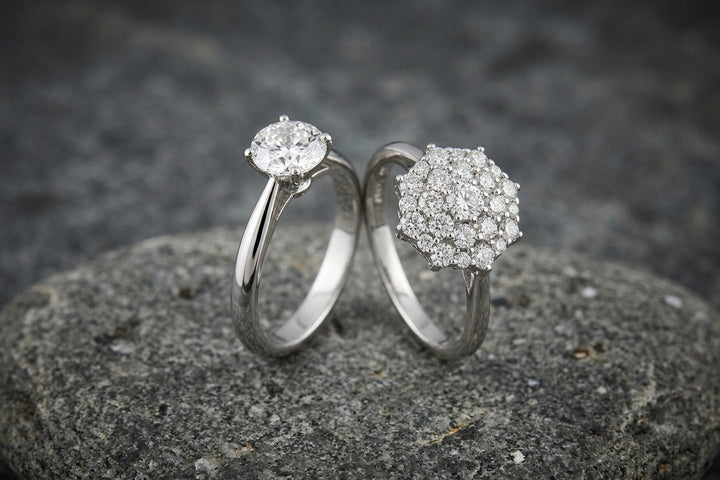
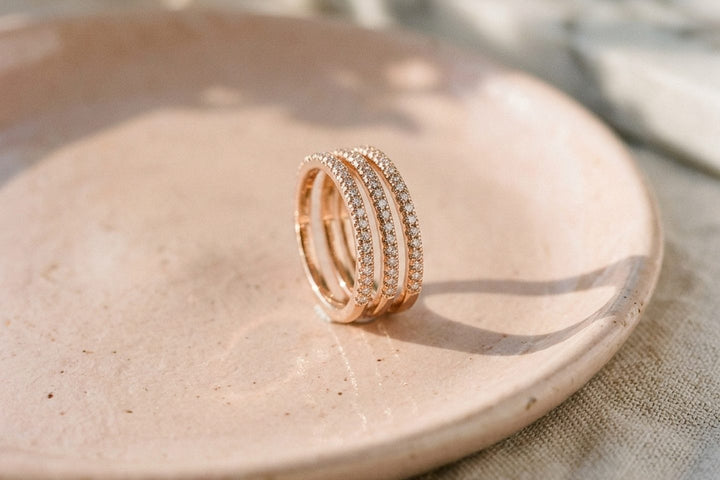
Melee is the trade term for small diamonds, generally under about 0.18 carat, and often much smaller, around 1 to 2 mm. They are used in pavé bands, halos, eternity bands, side stones and jewelry such as earrings and bracelets.

Why aren't they graded individually?
- Cost. A laboratory report would cost more than the stone.
- Volume. A pavé band can hold dozens; a tennis bracelet can hold more than fifty.
- Size. Tiny differences in grade are invisible at this scale.
How are they sorted and matched?
| Step | What happens |
|---|---|
| Sizing | Stones are sieved by diameter so each row looks even |
| Color sorting | Grouped in ranges, such as colorless or near-colorless |
| Clarity sorting | Grouped in ranges, such as VS or SI |
| Screening | Batches are checked to separate natural from lab-grown and to catch simulants |
| Matching | The setter picks stones that look identical side by side |
What matters most in accent diamonds?
- Matching color. A slightly yellow stone in a row of white ones stands out.
- Matching the center. Accents a little warmer than the center can make it look whiter; much warmer looks mismatched.
- Even size. Uneven stones make a band look lumpy.
- Secure setting. Tiny stones depend on tiny prongs or beads, so workmanship matters. See the pavé band guide.
- Brightness. Well-cut melee sparkles even at 1 mm.
How is accent weight shown?
As total carat weight, the combined weight of all the small stones, often written as "ctw" or "tw". A ring described as "1.5 ctw" might be a 1 carat center with 0.5 carat of accents. See CT vs CTW.
Are accent diamonds lab grown or natural?
Either. Ask, because a ring can combine a lab-grown center with natural accents, or the reverse. Reputable sellers disclose this. At Diamond Studio, bands, bracelets and earrings come with a Diamond Studio certificate of authenticity, and center diamonds come with an IGI or GIA report. See disclosing lab-grown.
How do you care for accent diamonds?
Small stones collect lotion and dirt quickly and lose sparkle, so clean pavé and halos regularly with warm soapy water and a soft brush. Have the setting checked yearly, since a missing melee stone is the most common repair on pavé rings. See the jewelry care guide and how often jewelry should be inspected.
Browse designs with accents in pavé rings, halo rings, hidden halo rings and eternity rings.
Frequently asked questions
Are larger side stones graded?
Side stones over about a quarter carat sometimes have their own reports. Ask the jeweler.
Can a lost accent diamond be replaced?
Yes. A jeweler matches a new stone by size and color.
Do accent diamonds lower the ring's quality?
No, if they are well matched and set. They add sparkle and make the center look larger.
Can melee be fake?
Reputable suppliers screen batches. Buy from a jeweler who discloses what is in the piece.
What color are accent diamonds usually?
Typically colorless to near-colorless, matched to the center.

 IGI certified